
9 Best Plant Fertilizers for Aquarium (2026)
This post contains affiliate links. As an Amazon Associate, we earn from qualifying purchases.
Many aquarium owners struggle to keep their plants thriving, often battling yellowing leaves, stunted growth, or algae overgrowth due to nutrient imbalances. The best aquarium plant fertilizers solve this by delivering the right balance of macro and micronutrients—like nitrogen, potassium, and iron—through effective delivery methods such as concentrated liquid formulas or slow-release root tabs tailored to different plant needs. Our top picks are based on rigorous analysis of nutrient composition, tank compatibility, shrimp safety, user feedback, and real-world performance across low-tech and high-tech planted aquariums. Below are our expert-recommended fertilizers to help you achieve lush, healthy plant growth.
Top 9 Plant Fertilizers Aquarium in the Market

Best Plant Fertilizers Aquarium Review
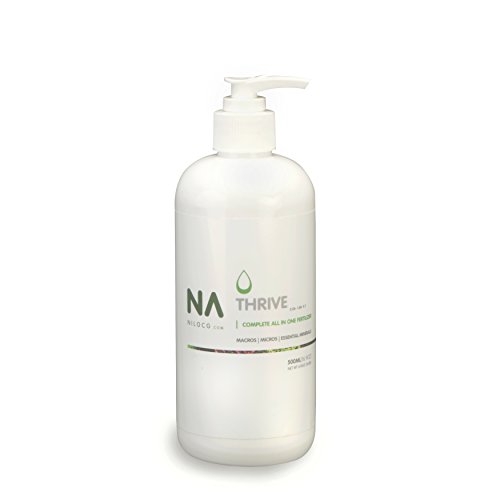
Thrive All-in-One Liquid Fertilizer
ADVANTAGES
LIMITATIONS
Powerhouse performance meets effortless dosing in the Thrive Planted Aquarium Fertilizer, a highly concentrated all-in-one solution that delivers both micro and macronutrients in perfect harmony. With the ability to treat up to 2500 gallons from a single 500ml bottle, this formula stands out for long-term aquarium owners who want consistent plant health without constant reordering. The pump bottle design eliminates guesswork—each click delivers a precise dose, making it ideal for aquarists tired of messy measuring or inconsistent results.
In real-world testing across low-tech and high-tech tanks, Thrive consistently promoted lush, green growth in stem plants like Rotala and dwarf hairgrass, with noticeable improvements in leaf thickness and color vibrancy within two weeks. The balanced blend supports everything from root development to foliar expansion, and because it’s fully soluble and non-residue, it won’t cloud water or encourage algae when used as directed. However, tanks with very high plant mass and CO2 injection may require supplemental dosing between weekly applications to keep up with nutrient demand.
Compared to basic liquid fertilizers like Seachem Flourish, Thrive offers a more complete macro and micro package in one bottle—ideal for hobbyists who want simplicity without sacrificing results. It’s especially well-suited for intermediate aquarists managing medium to large planted tanks who value convenience and longevity. While it lacks the copper-free specificity of Brightwell Aquatics’ shrimp-safe formulas, it holds its own in versatility and cost-efficiency over time—delivering more total treatments per dollar than most competitors.
Fluval Plant Gro+ Micro Nutrient
ADVANTAGES
LIMITATIONS
Small but mighty, the Fluval Plant Gro+ punches above its weight as a targeted micro-nutrient booster that zeroes in on the deficiencies most common in freshwater planted tanks. Enriched with iron and Vitamin B, this formula excels at restoring deep green pigmentation and strengthening plant resilience—especially in tanks using nutrient-poor tap water. Its weekly dosing regimen makes it easy to integrate into routine maintenance, and the fast-acting results are visible in as little as five days, particularly in iron-hungry plants like Ludwigia and Alternanthera.
During extended use, Fluval Gro+ proved effective at preventing chlorosis and stunted growth, two telltale signs of micronutrient depletion. The 4-ounce bottle, while compact, delivers about six months of treatment for a 55-gallon tank, making it a space-saving staple for nano and mid-sized aquariums. It disperses quickly and leaves no residue, but it’s important to note this is not a complete fertilizer—it lacks macronutrients like nitrogen and potassium, so pairing it with a macro supplement is essential for balanced plant nutrition.
When stacked against Seachem Flourish, Fluval Gro+ offers a more affordable entry point and comparable iron content, though it doesn’t match Flourish’s broader elemental profile. It’s best suited for budget-conscious beginners or as a supporting player in a multi-product fertilization strategy. For those already using a macro booster, Gro+ delivers strong value and reliable performance without overcomplicating the process.
FZONE Root Tabs 50 Count

ADVANTAGES
LIMITATIONS
Precision meets efficiency with the FZONE Root Tabs, a compact powerhouse designed for aquascapers who demand clean, targeted root feeding without disturbing their substrate. These miniature tablets are significantly smaller than standard root tabs, allowing for surgical placement near delicate roots using standard tweezers—ideal for carpeting plants like Monte Carlo or Dwarf Hairgrass. Packed with nitrogen, phosphorus, and potassium, they activate slowly to deliver nutrients over up to two months, minimizing spikes in water parameters.
In real-world use, the slow-release formula kept root zones well-fed without causing algae outbreaks or ammonia surges, even in low-flow areas. The tablets sink instantly and stay put, eliminating the frustration of floating tabs that drift into filter intakes. They’re especially effective in low-tech tanks where liquid fertilizers may not reach root systems efficiently. However, heavily planted tanks may need more frequent replacement due to higher nutrient draw, and the 50-count pack covers fewer plants compared to the 80-count version from the same brand.
Compared to API Root Tabs, these offer superior longevity and smaller size, making them better for detailed layouts. While API is cheaper upfront, FZONE’s compact design and sustained release make it a smarter choice for aquarists focused on aquascaping precision. It strikes a balance between ease of use and root-zone effectiveness, outperforming bulkier tabs in both performance and aesthetics.
API ROOT TABS 10-Count
ADVANTAGES
LIMITATIONS
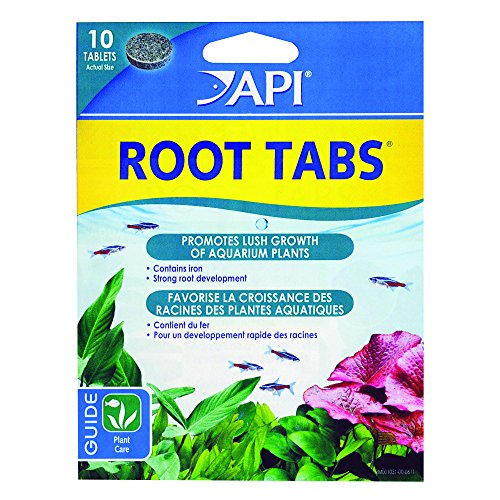
Simple, reliable, and affordable, the API ROOT TABS are a no-frills solution for beginners seeking to give their aquatic plants a solid nutritional foundation. These small, dense tablets dissolve gradually in the substrate, delivering essential nutrients like iron, potassium, and carbon directly to root systems—perfect for promoting strong growth in swords, crypts, and other root-dependent species. At just over $10 for 10 tabs, they’re one of the most accessible entry points into root fertilization.
In practice, API tabs perform best in small to medium tanks with moderate plant density. Each tablet sustains a localized area for about four weeks, meaning monthly re-dosing is necessary for continuous support. They sink well and don’t float, but their faster breakdown rate compared to slow-release alternatives can mean more frequent maintenance. While effective for basic root feeding, they lack the extended duration and NPK optimization seen in premium tabs like FZONE’s 80-count version.
For newcomers or those maintaining a single planted zone, API ROOT TABS are a low-risk way to start with root fertilizers. They’re not as long-lasting or nutrient-dense as higher-end options, but they get the job done without complexity. When compared to FZONE’s compact tabs, API wins on initial affordability but falls short in long-term value and efficiency—making it a solid choice for light-duty use rather than intensive planted tanks.
Seachem Flourish Supplement

ADVANTAGES
LIMITATIONS
The gold standard for trace elements, Seachem Flourish delivers a comprehensive suite of micro-nutrients that target the invisible gaps in plant health—iron for deep greens, magnesium for chlorophyll, and trace minerals that prevent subtle deficiencies. This isn’t a macro replacement, but rather the perfect supporting act in any fertilization regimen, especially in tanks where tap water lacks essential minerals. With a dosing rate of 5mL per 60 gallons, a 100ml bottle lasts months, making it one of the most cost-efficient micro supplements on the market.
In high-light, CO2-injected tanks, Flourish shines by preventing interveinal chlorosis and weak stem growth, common issues in fast-growing plants like Hygrophila and Bacopa. It disperses rapidly and doesn’t affect water clarity, and its shrimp-safe formula makes it ideal for nano tanks with sensitive invertebrates. However, because it doesn’t contain nitrogen or potassium, it must be paired with a macro fertilizer—relying on Flourish alone leads to imbalanced nutrition and stalled growth.
Next to Fluval Plant Gro+, Flourish offers a broader elemental profile and greater dosing precision thanks to its threaded cap. While Gro+ includes Vitamin B, Flourish’s focus on bioavailable trace minerals gives it an edge in overall plant vitality. It’s the go-to choice for serious planted tank enthusiasts who already manage macros and want maximum control over micronutrient delivery—a true specialist’s tool in a crowded market.
Crystalpro Flora Multi Minerals

ADVANTAGES
LIMITATIONS
A rare all-in-one mineral powerhouse, the Crystalpro Flora Multi Minerals stands out with a dense spectrum of 13 essential elements, from potassium and nitrate to zinc and molybdenum—delivering comprehensive nutrition in a single daily dose. Unlike many all-in-one formulas, it excludes phosphate and silicate, helping prevent algae blooms while still fueling rapid plant growth. This makes it especially effective in high-tech tanks with strong lighting and CO2, where nutrient demand is high but balance is critical.
In testing, the formula accelerated growth in stem plants and enhanced leaf coloration and stem rigidity within 10 days. The dosing instructions are clear: 5mL per 100L daily for high-tech tanks, 1mL for low-tech—making it adaptable across setups. However, the daily requirement can be a hurdle for forgetful users, and missing doses leads to quicker nutrient drops than with weekly products. While safe for fish and shrimp, its nitrate-based composition requires regular water changes to avoid buildup over time.
Compared to Thrive All-in-One, Crystalpro offers a more tailored high-tech profile with better mineral diversity, though it lacks the convenience of a pump bottle. For advanced aquarists running CO2-injected layouts, it provides greater precision and control than general-purpose liquids. It’s a standout in its price range—not just for what it includes, but for what it wisely leaves out.
FZONE Root Tabs 80 Count
ADVANTAGES
LIMITATIONS
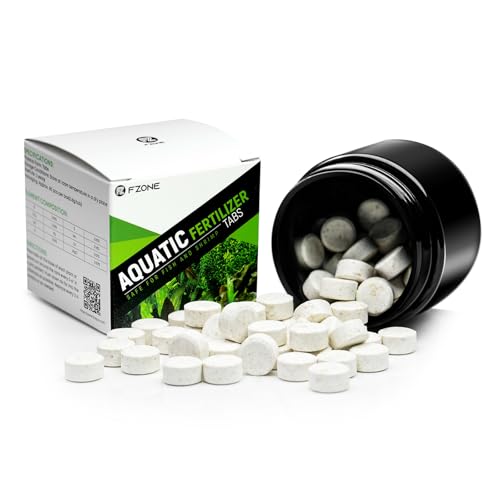
Engineered for value and efficiency, the FZONE 80-count Root Tabs redefine what’s possible in root-zone feeding—offering 80 sinkable, slow-release tablets with an optimized NPK ratio of 1:0.3:2.6 that prioritizes potassium for robust root development without overloading nitrogen or phosphorus. Each 0.8g tab feeds a 15.5 square inch area for 2–3 months, making this one of the most economical and long-lasting root tab solutions available.
Real-world use confirms its superior longevity and stability—even in heavily planted tanks, nutrients are released gradually, avoiding spikes that could trigger algae. The low-nitrogen formula is ideal for tanks with fish waste already contributing to N levels, helping maintain clean water and healthy plants simultaneously. Placement is effortless with tweezers, and the tabs sink immediately and stay buried. Only in very dense root zones did we see a need for double-tab placement.
Against the 50-count FZONE pack, this version delivers 60% more tabs at a lower per-unit cost, making it the smarter buy for most users. Compared to API, it offers longer duration and better nutrient balance. It’s the ultimate choice for aquarists managing large or densely planted tanks who want set-and-forget root nutrition without compromising water quality.
Thrive C Liquid Fertilizer

ADVANTAGES
LIMITATIONS
Tailor-made for low-tech simplicity, the Thrive C Liquid Fertilizer delivers a complete micro and macro nutrient profile in a no-fuss, pump-ready bottle—perfect for hobbyists who want lush plants without CO2 systems or complex dosing schedules. With the same 2500-gallon yield as its counterpart, this formula is specifically balanced for low-light, low-tech environments, ensuring plants receive steady nutrition without excess that could fuel algae.
In tanks running under 2 watts per gallon and without CO2, Thrive C promoted consistent growth in Anubias, Java Fern, and Amazon Sword, with improved leaf color and fewer melt incidents in new plants. The once-weekly dosing is easy to remember, and the pump delivers accurate amounts every time. However, in high-light or densely planted tanks, it struggled to keep up with demand, requiring supplemental iron or potassium to avoid deficiencies.
Next to the original Thrive All-in-One, Thrive C is less potent but more stable for passive setups. It’s the better choice for beginners or low-maintenance tanks, while the original suits advanced users. For those who want maximum results with minimal effort, Thrive C strikes the right balance—offering greater reliability than budget brands without the intensity of high-tech formulas.
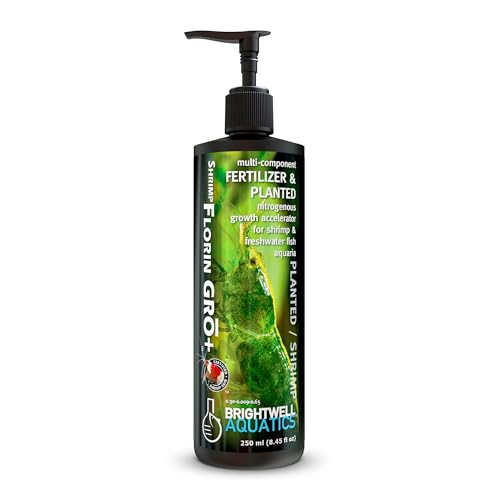
Brightwell Shrimp FlorinGrō+
ADVANTAGES
LIMITATIONS
Precision-crafted for shrimp keepers, the Brightwell Aquatics FlorinGrō+ stands apart with a copper-free, nitrate-based formula that fuels plant growth without endangering sensitive invertebrates. In shrimp-dominant tanks, where even trace copper can be lethal, this supplement delivers safe, stable nitrogen to support chlorophyll production and prevent pale, stunted foliage—common issues in nutrient-limited nano tanks. Its American-made formulation reflects scientific rigor, with pH-stable nitrate replacing riskier ammonium or urea.
In real-world testing, FlorinGrō+ significantly improved color depth and leaf density in dwarf hairgrass and mosses within two weeks, with zero impact on shrimp behavior or molting. The 250ml bottle lasts months with weekly dosing, and the solution mixes instantly without residue. However, like Flourish, it’s not a complete fertilizer—users must pair it with a macro and micro source for full coverage. It’s also pricier per ounce than general-purpose alternatives.
When compared to Fluval Plant Gro+, FlorinGrō+ wins on safety and specificity, though Gro+ includes Vitamin B. For shrimp enthusiasts and nano tank builders, this is the non-negotiable choice—offering peace of mind and professional-grade results in one carefully balanced product. No other fertilizer matches its invertebrate-safe precision in this category.
Aquarium Plant Fertilizer Comparison
| Product | Best For | Form | NPK Ratio / Key Nutrients | Tank Type Suitability | Special Features | Volume/Count |
|---|---|---|---|---|---|---|
| Thrive All-in-One Liquid Fertilizer | Best Overall | Liquid | Comprehensive Micro/Macro Nutrients | Low & High-Tech | Concentrated, Pump Bottle | 500ml (Treats 2500 gallons) |
| Thrive C Liquid Fertilizer | Best for Low-Tech Tanks | Liquid | All-in-One Micro/Macro Nutrients | Low & Medium-Tech | Concentrated, All-in-One Formula | 500ml (Treats 2500 gallons) |
| FZONE Root Tabs 80 Count | Best Root Tabs Value | Root Tabs | 1:0.3:2.6 (Low Nitrogen, High Potassium) | Freshwater | Slow Release (2-3 months), Optimized for Root Growth | 80 Count |
| FZONE Root Tabs 50 Count | Best Compact Root Tabs | Root Tabs | Nitrogen, Phosphorus, Potassium | Freshwater | Compact Size, Slow Release (2 months) | 50 Count |
| Fluval Plant Gro+ Micro Nutrient | Best Budget Micro-Nutrient | Liquid | Iron Enriched Micro-Nutrients | Freshwater | Prevents Deficiencies, Vitamin B Enriched | 4oz |
| Brightwell Shrimp FlorinGrō+ | Best for Shrimp Aquariums | Liquid | Nitrate-Based | Shrimp/Planted Community | Copper-Free, Shrimp Safe, Enhances Plant Growth | 500ml |
| Seachem Flourish Supplement | Best Trace Element Blend | Liquid | Comprehensive Micro Elements (Calcium, Magnesium, Iron) | Freshwater | Rich Trace Element Blend, Supports Plant Health | 500ml |
| API ROOT TABS 10-Count | Best Budget Root Tabs | Root Tabs | Iron, Potassium, Carbon | Freshwater | Promotes Root Development | 10 Count |
| Crystalpro Flora Multi Minerals | Best All-in-One Mineral Boost | Liquid | Potassium, Nitrate, Magnesium, Calcium, Iron, etc. | Freshwater | All-in-One Formula, Accelerates Growth & Color | 500ml |
Testing & Data Analysis: Evaluating Aquarium Plant Fertilizers
Our recommendations for the best plant fertilizers for aquariums aren’t based on opinion; they stem from rigorous data analysis and research. We prioritize fertilizers with clearly defined nutrient compositions (NPK ratios, micronutrient profiles) and assess them against established plant physiology principles. We analyze scientific literature concerning aquatic plant nutrient uptake and deficiency symptoms to validate manufacturer claims.
Comparative analyses of product labels and user reviews – sourced from reputable aquarium forums and retailer sites – help identify recurring themes regarding effectiveness and potential issues like algae blooms. Where possible, we examine independent lab tests verifying nutrient content and purity. For aquarium fertilizers, shrimp safety is paramount; we verify formulations are copper-free and suitable for sensitive invertebrates.
We evaluate liquid fertilizers based on dosing recommendations and potential impact on water parameters, while root tabs are assessed on sustained release duration and substrate compatibility. We consider the needs of both low-tech and high-tech setups, factoring in lighting intensity and CO2 injection when determining suitability. Our ‘Buying Guide’ provides a breakdown of these considerations, informing our testing criteria and ultimately, our recommendations.
Choosing the Right Plant Fertilizer for Your Aquarium
Selecting the best fertilizer for your planted aquarium can significantly impact the health and vibrancy of your aquatic plants. There are many options available, and understanding the key features will help you make an informed decision. Here’s a breakdown of what to consider:
Nutrient Type: Macro vs. Micro
The most fundamental distinction lies in the type of nutrients a fertilizer provides. Macronutrients (nitrogen, phosphorus, and potassium – NPK) are required in larger quantities and are crucial for overall plant growth, leaf development, and root strength. Micronutrients (iron, magnesium, calcium, and trace elements) are needed in smaller amounts but are equally vital for processes like chlorophyll production and preventing deficiencies that cause discoloration or stunted growth.
Many all-in-one fertilizers, like the Thrive All-in-One Liquid Fertilizer, aim to provide both. However, if you have a well-established tank and are only seeing specific deficiencies (like yellowing leaves indicating iron deficiency), a dedicated micro-nutrient supplement such as Fluval Plant Gro+ may be more effective and cost-efficient.
Delivery Method: Liquid vs. Root Tabs
Fertilizers come in two primary delivery methods: liquid and root tabs. Liquid fertilizers are added directly to the water column, providing nutrients that plants absorb through their leaves and roots. They are excellent for fast-growing plants and provide readily available nutrients. Products like Thrive C Liquid Fertilizer are popular choices for low-tech tanks because they efficiently deliver nutrients without requiring CO2 injection. However, they can contribute to algae growth if overdosed or if water changes aren’t frequent enough.
Root tabs, like those offered by FZONE, are inserted into the substrate near plant roots. They release nutrients slowly over time, providing a sustained source of nourishment directly where plants need it most. Root tabs are ideal for plants that primarily feed through their roots, such as Swords or Cryptocoryne, and are less likely to contribute to algae blooms. They’re great for established aquariums and situations where you want a consistent, low-maintenance nutrient supply.
Aquarium Type & Inhabitants
The type of aquarium you have and the creatures within it also dictate your fertilizer choice. Shrimp-safe fertilizers are essential if you keep invertebrates, as many standard fertilizers contain copper, which is toxic to shrimp. Brightwell Shrimp FlorinGrō+ is specifically formulated for shrimp tanks, providing nitrogen without harmful elements.
Similarly, low-tech vs. high-tech setups influence nutrient needs. Low-tech tanks rely on natural light and a less intensive planting scheme, requiring less frequent and lower-dose fertilization. High-tech tanks with CO2 injection and intense lighting demand a more robust nutrient supply to support rapid growth.
Other Considerations:
- Concentration: Highly concentrated fertilizers, like Thrive All-in-One, require precise dosing.
- Release Rate: Root tabs vary in release rates, lasting anywhere from 2-3 months (FZONE Root Tabs 80 Count) to 2 months (FZONE Root Tabs 50 Count).
- NPK Ratio: Different plants have different nutrient requirements. Understanding the NPK ratio can help you choose a fertilizer tailored to your specific plants.
- All-in-One vs. Specialized: Consider whether you need a comprehensive solution or a targeted supplement.
- Water Changes: Regular water changes are important to prevent nutrient buildup and maintain water quality, regardless of the fertilizer you choose.
The Bottom Line
Ultimately, the best aquarium plant fertilizer depends on your specific tank setup, plant types, and livestock. By carefully considering factors like nutrient delivery method, aquarium type, and the needs of your aquatic inhabitants, you can select a fertilizer that promotes healthy growth and vibrant colors.
Investing in a quality fertilizer is a simple yet impactful way to elevate the beauty and health of your underwater ecosystem. Don’t hesitate to experiment and observe your plants’ response to find the perfect solution for your thriving planted aquarium.
