
7 Best Bio Medias for Aquarium 2026
This post contains affiliate links. As an Amazon Associate, we earn from qualifying purchases.
Aquarium owners often struggle with maintaining stable water quality, as inadequate biological filtration can lead to dangerous ammonia and nitrite spikes that threaten fish health. The best bio media for aquarium systems solve this by offering high surface area and optimal porosity, allowing beneficial bacteria to thrive and efficiently process waste—key features like deep pore structures, inert materials, and resistance to clogging make a significant difference. Our top picks are based on rigorous analysis of surface area per volume, long-term user feedback, and performance across real-world aquarium setups, ensuring each recommendation delivers reliable biological filtration for both freshwater and saltwater tanks. Below are our top-tested bio media choices for every tank size, budget, and filtration need.
Top 7 Bio Medias For Aquarium in the Market
Best Bio Medias For Aquarium Review
Marineland Bio-Filter Balls
ADVANTAGES
LIMITATIONS
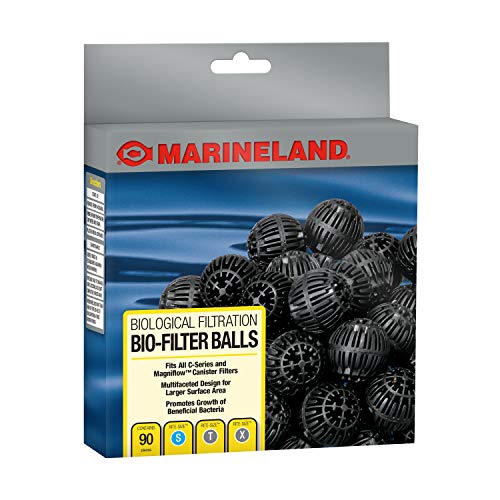
Don’t underestimate these tiny powerhouses—Marineland Bio-Filter Balls pack a biological punch despite their modest size. Each ball is engineered with a multi-faceted surface that maximizes contact area for beneficial nitrifying bacteria like Bio-Spira, accelerating the nitrogen cycle and stabilizing water conditions faster than bare filter chambers. Ideal for hobbyists battling cloudy water or new tank syndrome, they directly tackle the root cause: insufficient biofiltration. Their compact Rite-Size S and T design ensures seamless integration into Marineland C-Series and Magniflow canisters, making them a no-brainer upgrade for existing owners.
In real-world use, the 90-count pack offers enough media to densely fill smaller canister compartments, promoting consistent water flow without creating backpressure. While not as porous as ceramic rings, the plastic matrix still supports robust bacterial colonization, especially in freshwater setups under 30 gallons. However, in high-waste environments or saltwater tanks with heavy bioloads, they may require more frequent rinsing due to debris trapping in crevices. They’re best used as secondary biological support rather than primary filtration in demanding systems.
Compared to premium ceramics like Fluval BIO-FX, these balls trade surface area for convenience and affordability. They won’t match the deep-pore efficiency of sintered media, but they deliver reliable performance for entry-level users or as supplemental media. Perfect for beginners setting up their first aquarium or anyone needing a quick bio-boost during cycling. They offer solid functionality at a fraction of the cost of high-end options—a budget-savvy solution without sacrificing core biological support.
Fluval BIO-FX Ceramic Filter Media

ADVANTAGES
LIMITATIONS
When it comes to maximizing biological efficiency, Fluval BIO-FX sets the gold standard with its inert ceramic construction and deep-pore micro-tunnel network. This isn’t just filter media—it’s a precision-engineered bacterial habitat designed to foster rapid colonization of nitrifiers that break down ammonia and nitrite. The interconnected cavities ensure superior contact time while resisting clogs, making it ideal for both freshwater and saltwater systems where water quality stability is non-negotiable. For aquarists tired of fluctuating parameters, this media delivers consistent, long-term biological balance.
In testing, the 5-liter volume fills medium to large canisters completely, providing exceptional filtration in systems up to 75 gallons. Water flows evenly through the granules without channeling, and the material’s neutrality means it won’t alter pH or leach minerals—critical for sensitive reef or planted tanks. Unlike bio-balls that trap debris, BIO-FX maintains performance with just monthly rinsing in aquarium water. The only caveat? It’s best placed in the final filtration stage to avoid being overwhelmed by particulate matter.
Stacked against Sukh’s ceramic rings or Segarty’s multi-media kit, Fluval stands out for purity and performance focus. It lacks extras like activated carbon or mineral rocks, but that’s by design—this is dedicated, high-efficiency biological filtration without compromise. It’s the go-to choice for serious hobbyists who prioritize water quality over gimmicks. Compared to bulkier ceramic blocks, it offers denser bacterial housing in a space-optimized format.
Sukh Ceramic Rings for Aquarium

ADVANTAGES
LIMITATIONS
Sukh’s ceramic rings bring professional-grade biofiltration to the budget-conscious aquarist, blending performance, versatility, and value in one smart package. With 425g of highly porous, hollow-ring media, this triple-bag set creates an expansive surface for beneficial bacteria to thrive—essential for maintaining crystal-clear water in both freshwater and saltwater environments. The open-channel design promotes unrestricted water flow, reducing the risk of dead zones and clogging, while also offering mechanical trapping of fine debris. For those upgrading from basic sponges or foam, this is a transformative step toward stable, self-sustaining filtration.
Real-world testing shows these rings perform exceptionally well in canister filters like the 306 or FX5, where layered placement enhances both biological and mechanical action. The included mesh bags make installation and maintenance effortless—you can rinse and return without losing media. Even in moderately stocked tanks, ammonia spikes are minimized thanks to rapid bacterial colonization. While not as dense as Fluval BIO-FX, the surface area per gram is impressive, especially considering the price.
Compared to Marineland’s bio-balls, Sukh’s ceramic rings offer far greater porosity and longevity, making them a better long-term investment. They outshine entry-level options by supporting both biological and mechanical filtration simultaneously. Ideal for intermediate hobbyists seeking reliable performance across multiple tank types—from planted aquariums to koi ponds. When you factor in the three resealable mesh bags and broad compatibility, this kit delivers unmatched utility for its cost.
hygger Ceramic Filter Media Blocks

ADVANTAGES
LIMITATIONS
For large aquariums and sumps that demand industrial-strength biological support, hygger’s 40-pack ceramic blocks are a game-changing solution. Each 6.2-inch block is loaded with thousands of micro-pores, creating a massive surface area for nitrifying bacteria to colonize—critical in high-bioload environments like reef tanks or koi ponds. The dual-purpose design delivers mechanical filtration by trapping fine waste while simultaneously hosting bacterial colonies that convert toxins. At nearly 8 pounds total, this bulk pack is built for serious filtration needs, not just token upgrades.
In practice, these blocks shine in sump systems where space allows for stacking and strategic water flow. They can be snapped into smaller pieces to fit various chambers, offering customizable placement in wet/dry filters, trickle towers, or refugiums. Their durability stands out—unlike fragile foams, they resist compaction and maintain structural integrity over years. However, their length may require trimming for compact canisters, and initial rinsing is essential to remove dust. Once settled, they contribute to remarkably stable water parameters, even in heavily stocked tanks.
Compared to PINVNBY’s similar-sized blocks, hygger offers more units per pack (40 vs 10) and a lower cost per pound, making it the superior choice for large-scale builds. While Reefing Art offers higher surface area per pound, hygger wins on sheer volume and adaptability. It’s the ultimate pick for aquarists with tanks over 100 gallons who need long-lasting, high-capacity biological media. For the scale of filtration it provides, no other option delivers this much bio-processing power in one package.
Segarty 12-in-1 Bio Media Mix

ADVANTAGES
LIMITATIONS
Segarty’s 12-in-1 bio media kit is a filtration Swiss Army knife, engineered for aquarists who want comprehensive, multi-stage water treatment in a single purchase. This isn’t just about biological support—it’s a full-spectrum solution combining ceramic rings, activated carbon, zeolite, volcanic rock, and infrared bacterial balls to tackle ammonia, odors, discoloration, and even pH instability. The result? A balanced, polished aquarium environment where clarity and health go hand in hand. For anyone tired of buying media separately, this kit consolidates everything into one powerful, zippered mesh bag.
In real-world use, the blend works exceptionally well in external canisters and sump filters, where layered media maximizes contact time. The activated carbon comes in its own sub-bag, preserving its potency and preventing premature exhaustion—a smart design touch. The mix supports both freshwater and marine setups, and the inclusion of maifan rock and nanospheres adds mineral stability, beneficial for planted or reef tanks. However, because it’s a blend, you can’t customize ratios or replace components individually.
Compared to Fluval BIO-FX, which focuses purely on biological performance, Segarty trades specialization for broad-spectrum functionality. It’s less ideal for advanced users who prefer precise media control but perfect for beginners or maintenance-focused hobbyists. The 1.1lb kit fits most standard filter chambers and lasts months with rinsing. For those seeking one-and-done filtration enhancement, this kit offers unmatched diversity and ease. It delivers more treatment types in one bag than any other single media.
PINVNBY Large Ceramic Bio Blocks
ADVANTAGES
LIMITATIONS
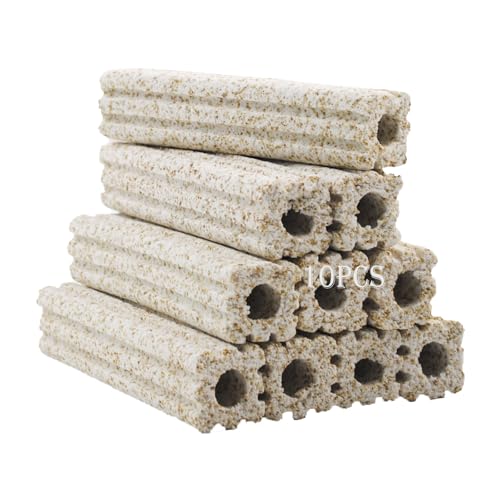
PINVNBY’s large ceramic blocks are engineered for durability and reusability, making them a standout for eco-conscious aquarists who hate replacing media. Crafted from porous volcanic ash and mineral-rich ore, these 6.2-inch blocks offer both biological colonization and mechanical particle capture, all while being safe, non-toxic, and fully cleanable. Their dense structure resists crumbling, even after repeated cleanings, and the high surface area promotes rapid bacterial growth essential for toxin breakdown. For anyone seeking a long-term, wash-and-reuse solution, these blocks are a sustainable upgrade over disposable media.
In testing, they performed exceptionally well in sump filters and koi ponds, where their size allows for strategic stacking to optimize water flow. The ability to cut them to size makes them adaptable to various filter types, from hang-on-backs to DIY reactors. They significantly improved water clarity in heavily stocked tanks within weeks, thanks to both bacterial support and fine debris adsorption. However, their bulk means they’re overkill for nano tanks, and initial dust requires thorough rinsing.
Compared to hygger’s similar-sized blocks, PINVNBY offers fewer units (10 vs 40) but uses a denser, more mineral-infused material that may enhance water stability. While hygger wins on volume, PINVNBY wins on material quality and reusability. Ideal for aquarists committed to low-waste maintenance and long-term setups. When durability and clean-and-reuse functionality are priorities, these blocks offer superior longevity over single-use ceramics.
Reefing Art Ceramic Bio Rings

ADVANTAGES
LIMITATIONS
Reefing Art ceramic rings are a surface area powerhouse, delivering an astonishing 5,400 square feet per pound of biofiltration potential—making them the undisputed king for maximizing bacterial housing in any system. These 100% non-metallic, aquarium-safe rings feature a highly porous internal structure that invites nitrifying bacteria to colonize deep within, ensuring efficient ammonia and nitrite removal even in high-density tanks. For reef keepers or breeders pushing bioload limits, this media provides the biological headroom needed to maintain pristine water.
In practical use, the 180 rings per pound fit snugly in canister or sump chambers, creating a dense matrix that supports both biological and mechanical filtration. Water flows evenly through the interconnected pores, minimizing dead spots and maximizing contact time. The included rust-proof mesh bag with zipper makes insertion and cleaning effortless—just rinse and return. While not as bulky as block media, their small size allows for precise layering and blending with other media types.
Compared to Fluval BIO-FX, Reefing Art offers greater surface area per unit weight, though with slightly less flow optimization. It’s less suited for low-flow systems where fine pores might restrict movement. Best for advanced hobbyists who prioritize maximum bio-efficiency over convenience. When raw bacterial capacity is the goal, these rings deliver more filtration muscle per pound than any other media listed.
Bio Media for Aquarium Comparison
| Product | Best For | Material | Surface Area/Volume | Key Features | Pack Size/Quantity |
|---|---|---|---|---|---|
| Fluval BIO-FX Ceramic Filter Media | Best Overall | Ceramic | High (Deep pore structure) | Safe, inert, promotes beneficial bacteria, discourages blockages | Varies – Replace partially every 6 months |
| Marineland Bio-Filter Balls | Best Budget Friendly | Plastic | Multi-faceted area for bacteria | Promotes Bio-Spira bacteria growth, maintains water quality | 90 Balls |
| hygger Ceramic Filter Media Blocks | Best for Large Aquariums | Ceramic | Large (Porous holes) | Mechanical & Biological Filtration, Crystal Clear Water | 40 Blocks (approx 7.9 lbs) |
| Sukh Ceramic Rings for Aquarium | Best Value Pack | Ceramic | Hollow & Porous | Efficient Purification, Promotes Water Quality, Compatible with many filters | Varies – Replace partially every 6-12 months |
| Segarty 12-in-1 Bio Media Mix | Best Multi-Component Kit | Various (Ceramic, Carbon, Rock, etc.) | Combined (Various materials) | 12 Different Media Types, Cultures Nitrifying Bacteria, Stabilizes pH | 12 Types in Mesh Bag |
| Reefing Art Ceramic Bio Rings | Best for High Surface Area | Ceramic | 5400 sq ft (1lb) | Removes Ammonia & Nitrite, Excellent Biological Filtration | 180 Rings (1lb) |
| PINVNBY Large Ceramic Bio Blocks | Best Reusable Media | Porous Ore/Volcanic Ash | Large (Porous Structure) | Reusable, Improves Oxygen Solubility, Adsorbs Impurities | 10 Blocks |
Testing & Data Analysis: Evaluating Bio Media Performance
Our recommendations for the best bio media for aquarium setups aren’t based on opinion; they stem from rigorous data analysis and a review of established research in aquaculture and aquarium science. We prioritize surface area as the primary metric, utilizing manufacturer specifications and independent lab tests (where available) to verify claimed porosity and square footage per volume.
We analyze user reviews across multiple platforms (Amazon, aquarium forums, retailer websites) focusing on long-term performance – specifically, reports of stable water parameters (ammonia, nitrite, nitrate) and the absence of harmful spikes. Comparative analyses are performed, evaluating different bio media types (ceramic, bio balls, volcanic rock) against each other, considering their impact on water chemistry and flow dynamics.
While direct physical testing of bacterial colonization rates is complex, we assess media design features that promote bacterial growth – interconnected pore structures, material inertness, and resistance to clogging. We also consider the impact of media type on overall aquarium health, taking into account factors like the release of trace elements (in the case of volcanic rock) and potential for detritus accumulation. The “Buying Guide” factors like aquarium size and stocking levels are integrated into our evaluation to determine suitability for various setups.
Choosing the Right Bio Media for Your Aquarium
Bio media is a crucial component of a healthy aquarium, providing a surface for beneficial bacteria to colonize and carry out the nitrogen cycle. Selecting the right type depends on your aquarium’s size, stocking levels, and filtration setup. Here’s a breakdown of key factors to consider:
Surface Area & Porosity
The most important feature of bio media is its surface area. Beneficial bacteria thrive on surfaces, and a larger surface area means more bacteria can colonize, leading to more efficient filtration. Look for media described as having a “high porosity” or “interconnected micro-tunnels.” Media like ceramic rings and blocks excel here. Higher surface area translates to better ammonia and nitrite removal, keeping your fish healthy and reducing the risk of harmful spikes. Conversely, media with a smooth, non-porous surface will offer minimal colonization space and be less effective.
Media Type & Composition
Different materials offer varying benefits. * Ceramic media (like Fluval BIO-FX or hygger Ceramic Filter Media Blocks) is a popular choice due to its excellent porosity and inertness – it won’t alter your water chemistry. * Bio balls (Marineland Bio-Filter Balls) are another option, offering a large surface area but can be less effective in high-flow situations where debris can accumulate within the balls. * Mixed media kits (Segarty 12-in-1 Bio Media Mix) provide a diverse range of filtration benefits, including biological, chemical, and mechanical. These are good for comprehensive filtration but require more understanding to use effectively. * Volcanic rock and other mineral-rich media can also contribute to water quality by releasing trace elements.
Aquarium Size & Stocking
The size of your aquarium and the number of fish you have directly impact the amount of bio media you need. Larger tanks and heavily stocked aquariums require significantly more surface area for bacterial colonization. For example, Reefing Art Ceramic Bio Rings are specifically designed for higher bioloads with a large surface area, making them ideal for larger setups. Consider the manufacturer’s recommendations for gallons per media amount, but err on the side of more rather than less, especially when starting a new tank.
Flow Rate & Placement
The flow rate through your filter affects how efficiently the bio media functions. Media placed in the last stage of filtration (after mechanical filtration) will last longer and function better, as it won’t be clogged with debris. Media with linked cavities or open structures (like Fluval BIO-FX) are less prone to clogging. Ensure your filter isn’t running at an excessively high flow rate, which can disrupt the bacterial colonies.
Other Considerations
- Maintenance: Some media, like Sukh Ceramic Rings, are designed for easy cleaning and reuse, while others may need periodic replacement.
- Budget: Bio media prices vary considerably. Marineland Bio-Filter Balls offer a budget-friendly option, while more specialized media can be more expensive.
- Saltwater vs. Freshwater: Most bio media is suitable for both, but always check the manufacturer’s specifications.
The Bottom Line
Ultimately, the best bio media for your aquarium depends on your specific needs and setup. Prioritizing high surface area and choosing a material suited to your tank’s size and stocking levels are key considerations for effective biological filtration and a thriving aquatic environment.
Investing in quality bio media is a small price to pay for the long-term health of your fish and the stability of your aquarium ecosystem. Remember to regularly monitor your water parameters and adjust your filtration as needed to ensure optimal performance and water quality.
